четверг, 12 февраля 2009 г.

module#2 (internet)

Here ara some facts about creation of internet...

The USSR's launch of Sputnik spurred the United States to create the Advanced Research Projects Agency, known as ARPA, in February 1958 to regain a technological lead.ARPA created the Information Processing Technology Office (IPTO) to further the research of the Semi Automatic Ground Environment (SAGE) program, which had networked country-wide radar systems together for the first time. J. C. R. Licklider was selected to head the IPTO, and networking as a potential unifying human revolution.


Licklider moved from the Psycho-Acoustic Laboratory at Harvard University to MIT in 1950, after becoming interested in information technology. At MIT, he served on a committee that established Lincoln Laboratory and worked on the SAGE project. In 1957 he became a Vice President at BBN, where he bought the first production PDP-1 computer and conducted the first public demonstration of time-sharing.

At the IPTO, Licklider got Lawrence Roberts to start a project to make a network, and Roberts based the technology on the work of Paul Baran, who had written an exhaustive study for the U.S. Air Force that recommended packet switching (as opposed to circuit switching) to make a network highly robust and survivable. After much work, the first two nodes of what would become the ARPANET were interconnected between UCLA and SRI (later SRI International) in Menlo Park, California, on October 29, 1969. The ARPANET was one of the "eve" networks of today's Internet.

Following on from the demonstration that packet switching worked on the ARPANET, the British Post Office, Telenet, DATAPAC and TRANSPAC collaborated to create the first international packet-switched network service. In the UK, this was referred to as the International Packet Switched Service (IPSS), in 1978. The collection of X.25-based networks grew from Europe and the US to cover Canada, Hong Kong and Australia by 1981. The X.25 packet switching standard was developed in the CCITT (now called ITU-T) around 1976.

X.25 was independent of the TCP/IP protocols that arose from the experimental work of DARPA on the ARPANET, Packet Radio Net and Packet Satellite Net during the same time period. Vinton Cerf and Robert Kahn developed the first description of the TCP protocols during 1973 and published a paper on the subject in May 1974. Use of the term "Internet" to describe a single global TCP/IP network originated in December 1974 with the publication of RFC 675, the first full specification of TCP that was written by Vinton Cerf, Yogen Dalal and Carl Sunshine, then at Stanford University. During the next nine years, work proceeded to refine the protocols and to implement them on a wide range of operating systems.

The first TCP/IP-based wide-area network was operational by January 1, 1983 when all hosts on the ARPANET were switched over from the older NCP protocols. In 1985, the United States' National Science Foundation (NSF) commissioned the construction of the NSFNET, a university 56 kilobit/second network backbone using computers called "fuzzballs" by their inventor, David L. Mills. The following year, NSF sponsored the conversion to a higher-speed 1.5 megabit/second network. A key decision to use the DARPA TCP/IP protocols was made by Dennis Jennings, then in charge of the Supercomputer program at NSF.

The opening of the network to commercial interests began in 1988. The US Federal Networking Council approved the interconnection of the NSFNET to the commercial MCI Mail system in that year and the link was made in the summer of 1989. Other commercial electronic e-mail services were soon connected, including OnTyme, Telemail and Compuserve. In that same year, three commercial Internet service providers (ISP) were created: UUNET, PSINet and CERFNET. Important, separate networks that offered gateways into, then later merged with, the Internet include Usenet and BITNET. Various other commercial and educational networks, such as Telenet, Tymnet, Compuserve and JANET were interconnected with the growing Internet. Telenet (later called Sprintnet) was a large privately funded national computer network with free dial-up access in cities throughout the U.S. that had been in operation since the 1970s. This network was eventually interconnected with the others in the 1980s as the TCP/IP protocol became increasingly popular. The ability of TCP/IP to work over virtually any pre-existing communication networks allowed for a great ease of growth, although the rapid growth of the Internet was due primarily to the availability of commercial routers from companies such as Cisco Systems, Proteon and Juniper, the availability of commercial Ethernet equipment for local-area networking, and the widespread implementation of TCP/IP on the UNIX operating system.

For me Internet is a part of life!If there wasn't internet I shouldn't have "hands".I think that there are all what the man need.These are information about all the world.With help the internet man can find information about all things,which are happening in the world.If there wasn't internet i won't be able to give you information about it's creation.

module#2 (video games)


When i have any free time i like to play games.Me interested any sprot simulyators or on-line games.I like fooball simulator FIFA09.I like to play it with my brother.It is very intresting,because there is an emulative spirit.

From on-line games i like World of Warcraft.It  immediate game about war between Aliance and Horde.It is intrestin because it is how real life.It is an endless game.And here you can contact whit people all the world,to find new frieds.

понедельник, 9 февраля 2009 г.

module #2 (TV)


Television, also called TV, is one of our most important 
means of communication. It brings moving pictures and 
sounds from around the world into millions of homes. 
The name "Television" comes from Greek word meaning 
"far", and a Latin word meaning "to see", so the word "television" means "to see far". 
Commercial TV stations broadcast mostly entertainment 
programs because they must attract larger numbers of viewers 
in order to sell advertising time at high prices. These 
programs include light dramas called situation comedies; 
ac- tion-packed dramas about life of detectives, police officers, 
lawyers and doctors; shows featuring comedians, dancers 
and singers; movies; quiz shows; soap operas; cartoons
Public television focuses mainly on education and culture. 
There are programs on wide range of subjects — from physics 
and literature to cooking and yoga. Public TV also broadcasts 
plays, ballets, symphonies as well as programs about art and 
history. Public TV attracts less viewer than commercial TV. 
I like to watch TV. Sometimes there are interesting programs. I like to watch any intellectual games, for example “hay aspet”. There are interesting questions about antic history of Armenia. I like to watch any concerts too, for example the ceremony of giving Oscar or Eurovision. 

воскресенье, 8 февраля 2009 г.

Module#2 (musik)


Music…
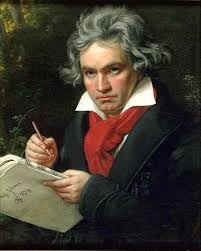
For me music is a special thing. I was going to the music school for 6 years. When I was a 7 years old my mother took me there. At first year I don’t want to go there, because I can’t sing very well. But after one year I understood that there were a lot of other interesting things there. And when I was ending music school I think that this was part of my life, and I was thank to my mother that she take me there. I learn to play the piano and composer .I learned a lot about history of music. I graduated music school with excellent marks.
What about my music preference, I am a “meloman”. This mean that I listen what I like. I like all tips of music! I like Europe, USA and Russian bands.  

пятница, 6 февраля 2009 г.

module#2 (newspapers/magazines)


Newspaper is a publication that presents and comments on 
the news. Newspapers play an important role in shaping public 
opinion and informing people of current events. 

The first newspapers were probably handwritten newssheets 
posted in public places. The earliest daily newssheet 
was "Acta Diurna" ("Daily Events") which started in Rome in 
59 B.C. The first printed newspaper was Chinese publication 
called "Dibao" ("Ti - pao") started in A.D.TOO's. It was 
printed from carved wooden blocks. The first regularly 
published newspaper in Europe was "Avisa Relation" or 
"Zeitung", started in Germany in ] 609. 
There are about 1 700 daily and 7 500 weekly newspapers 
in the US. The circulation of some weeklies is no more than a 
few hundred of copies per issue and the circulation of some 
dailies is over a million of copies. 
Magazine is one of the major mass media. Magazine is a 
collection of articles and stories. Usually magazines also contain 
illustrations. 

The earliest magazines developed from newspapers and 
booksellers catalogs. Such catalogs first appeared during the 
1600's in France. In the 1700's pamphlets published at regular 
intervals appeared in England and America. They were literary 
publications. One of the first British magazines "The 
Gentleman's Magazine" was published from 1731 to 1914. 
The first American magazine was called the "American 
Magazine", or "A Monthly View". 
There are specialized magazines intended for special business, 
industrial and professional groups, and consumer magazines 
intended for general public. There are several kinds 
of consumer magazines. 
As for me? I read newspapers only in on-line format .I think they have a big role in the life of society. Because the newspapers are the first media that give the people any information.What for magazines?I don’t like them very much. Yes, they are interesting.But there usually is information about Star’s or any famous thing. I value at first the séance of information, and in the final analysis he form of it’s present.

среда, 4 февраля 2009 г.

module#2 (book)


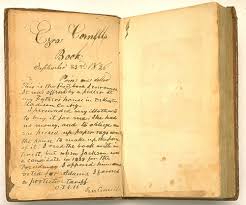
Book is the first media. Many, many years ago a town crier ran through the streets
and shouted out all the news. But now we live in the Atomic
Age. Too many things happen too quickly for us to learn
about them in the old-fashioned way. That is why we have to
read more and more in order to find out what is happening
in the world Reading is rarely a waste of time. Have you ever thought about the kind of books people
used long ago? It is only in the last 500 years that books have
been printed on paper. Before that time the only way of making
books was to write them out by hand. No one knows when
writing first began, but we have found drawings on the walls
of caves and scratchings on bones which are at least 25,000
years old.
In the 11th century the art of papermaking reached Europe 
but no trace of printing was found in Europe until 1423. It 
is known that Johann Gutenberg secretly tried out ways of 
printing in Strasbourg, Germany, in 1440. 
The knowledge of the methods of printing spread so quickly 
over the Continent of Europe that by the year 1487 nearly 
every country had started printing books. 
As for me? In childhood I used to reading all the day. But now I don’t have enough time for that. But sometimes, when I am sitting down in the armchair, and read any interesting book (believe me it is so pleasant) I have a big enjoy.


понедельник, 2 февраля 2009 г.

Mesrop Mashtoc


Mesrop Mashtoc is the creator of Armenian alphabet. He was born in the Hacekac village of Taron’s area in 361. He toke a greece education in Antoik. He knew greek, asoric and persian langueges. In the early ages he come to the capital Vagarshapat and works in the palace of king. Here he graduated his education by reading. Then he serves on army. In the age of 30 he became a priest. When he so that Armenia need his own alphabet. It would help him to take the Bible to the usual people. And with this request to the king of Armenia Vramshapuh. He accepted with him and gave him a quest to do it! Mesrop traveled a lot. He was in the all centers of antic world. He was in Alexandrine, Greece, Persia and in the different parts of Armenia. After 20 years of traveling, in 405 Mesrop Mashtoc create Armenian alphabet! It is the greatest thing that he does for the surviving of Armenian nation! The first sentence that was written by Armenian was "To know wisdom and gain instruction; to discern the words of understanding..."